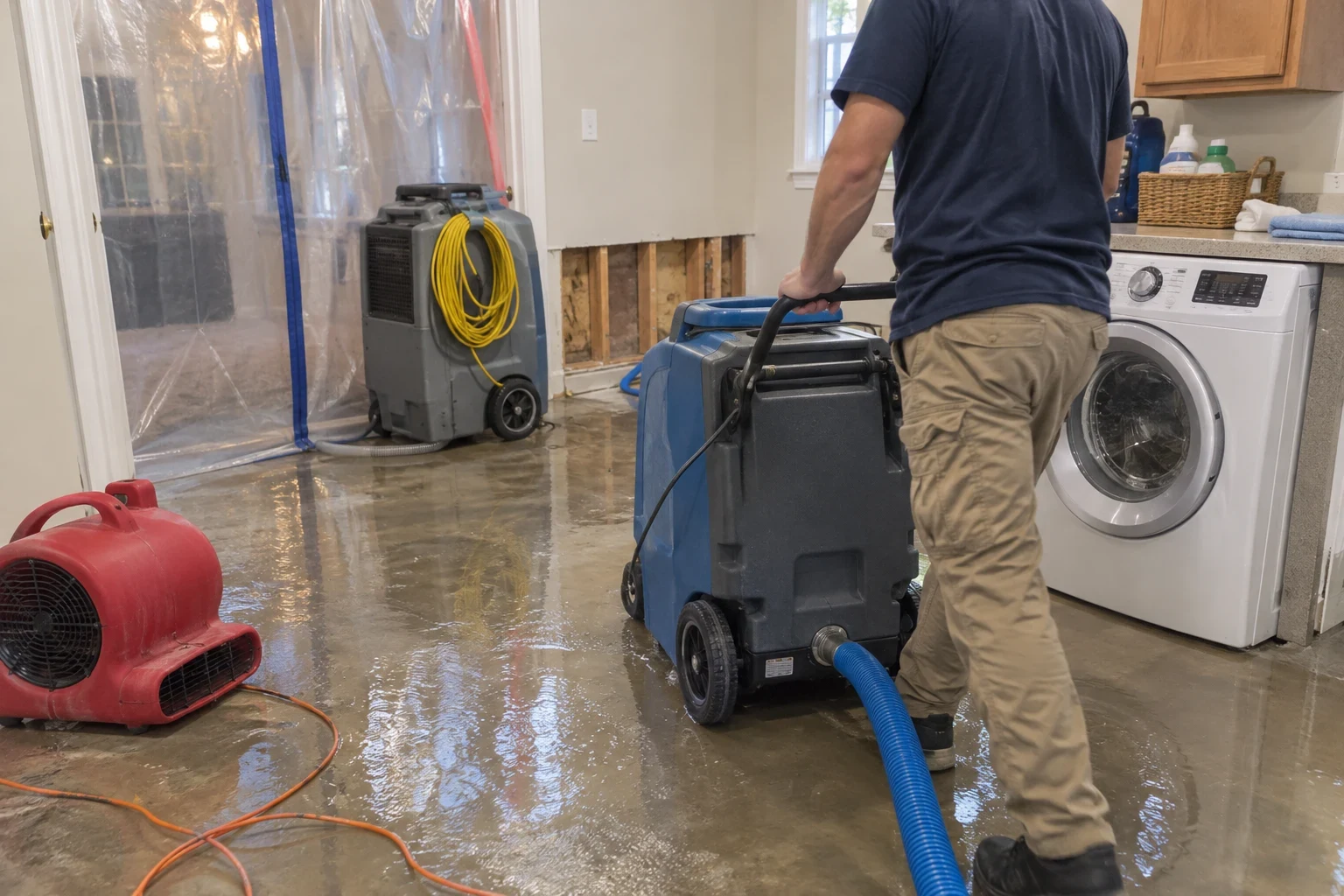
Manchester, VA
Water Damage Restoration in Manchester That Saves What Can Be Saved
We handle water extraction, structural drying, mold remediation, flood and sewage cleanup, and the rebuild that follows. We measure the moisture first and tell you what can dry in place, instead of tearing out your home by habit. We work in Manchester and nearby towns such as Midlothian and Bon Air.
- Repair before replace
- Moisture readings you can see
- Emergency water response
- Works with most major insurers
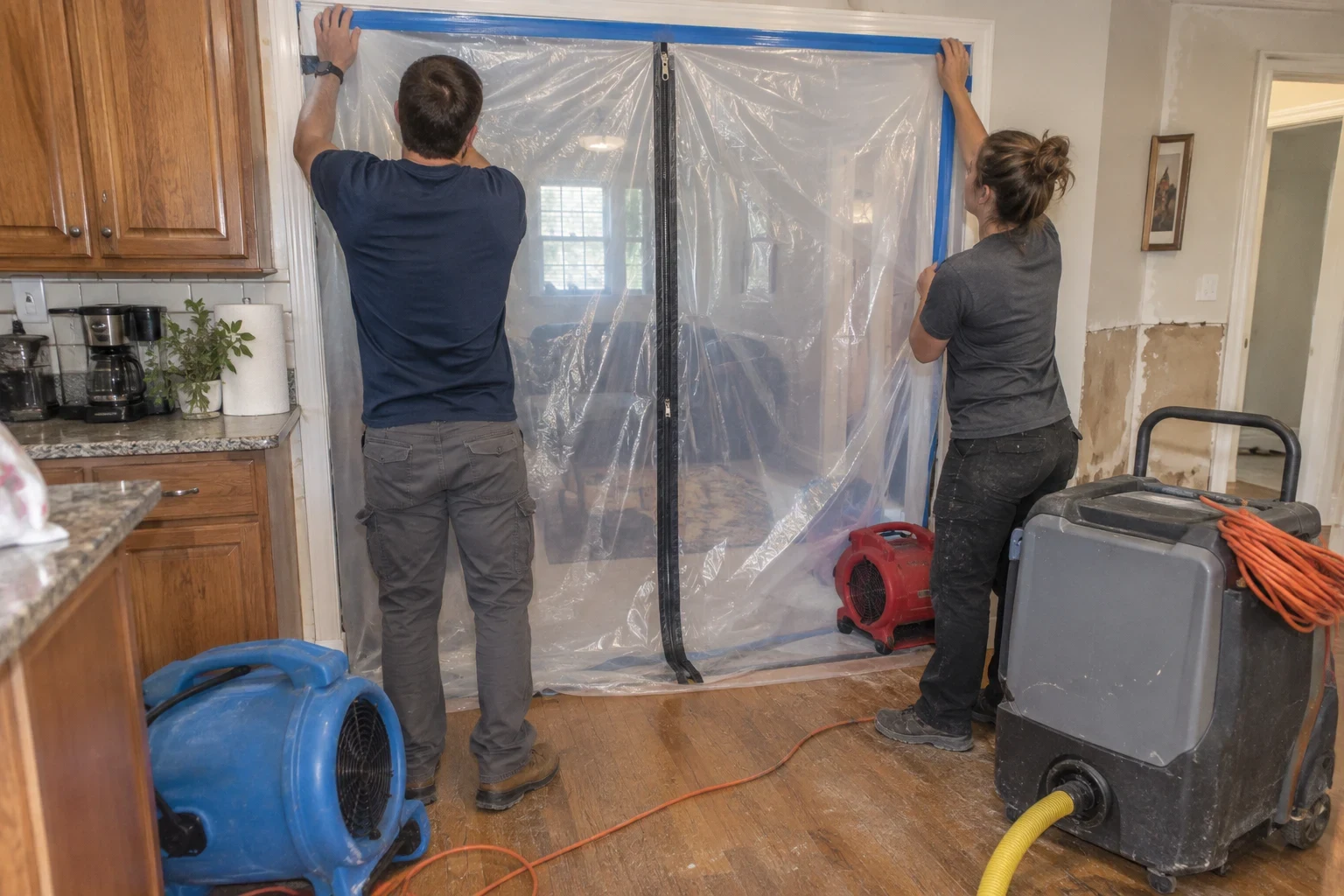
About Water Damage Restoration Manchester
We are a local water damage restoration company serving Manchester, VA and the towns around it. Our work happens inside your home, so we treat it that way: shoe covers, floor protection and a clear explanation of the plan ahead of any wall getting opened.
Our approach is repair before replace. Water damage gets expensive when sound material is thrown out because nobody took the time to measure it. We take the readings, explain what they mean and recommend replacement only when drying will not bring a material back. We work with most major insurance companies, and we can walk you through how the claim usually goes, while your adjuster makes the coverage decisions.
Water Damage Services for Your Home
Most jobs start with water extraction and drying and end there, because wet materials caught early can often be saved. When water has sat long enough to grow mold, or when it came from a sewer line, the work changes and so does the equipment. We also handle repairs and rebuild, so the crew that dried the wall can put it back together. Each service has its own page if you want the details.
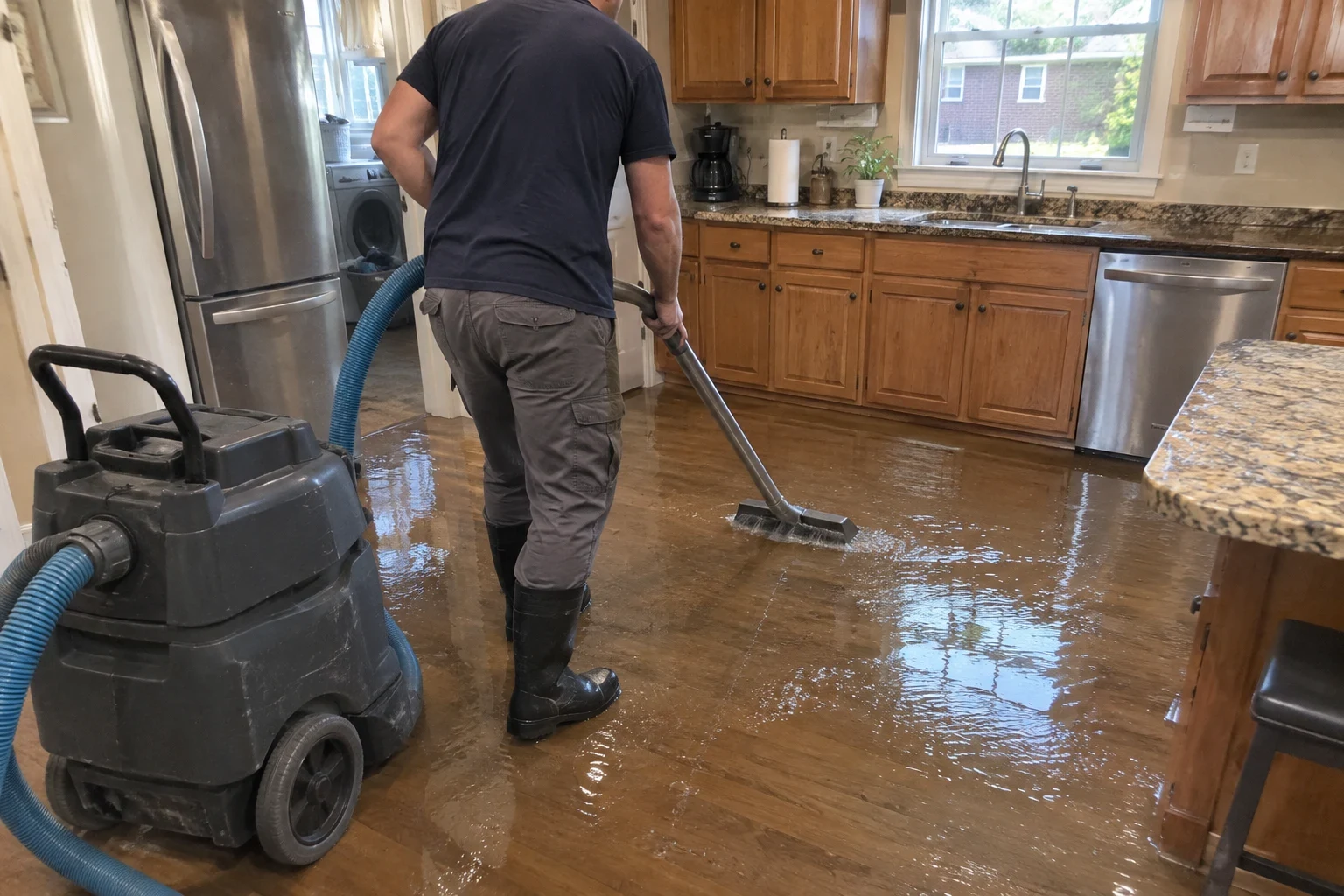
Water Extraction
We pull standing and soaked-in water from floors, carpet and crawlspaces fast, then measure what can be dried and kept instead of torn out.
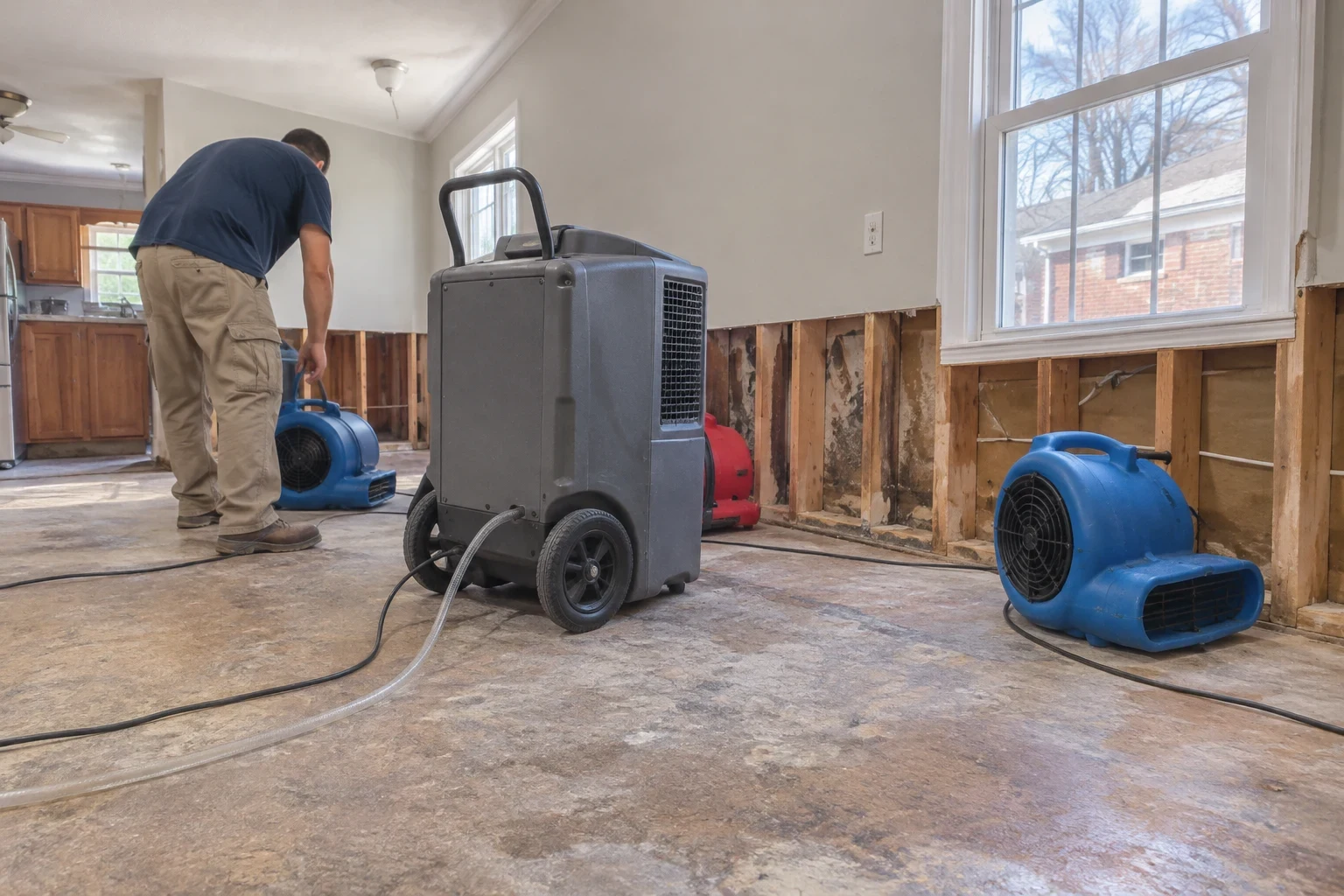
Drying and Dehumidifying
Air movers, dehumidifiers and daily moisture readings that dry walls, floors and framing in place so only truly failed materials get replaced.
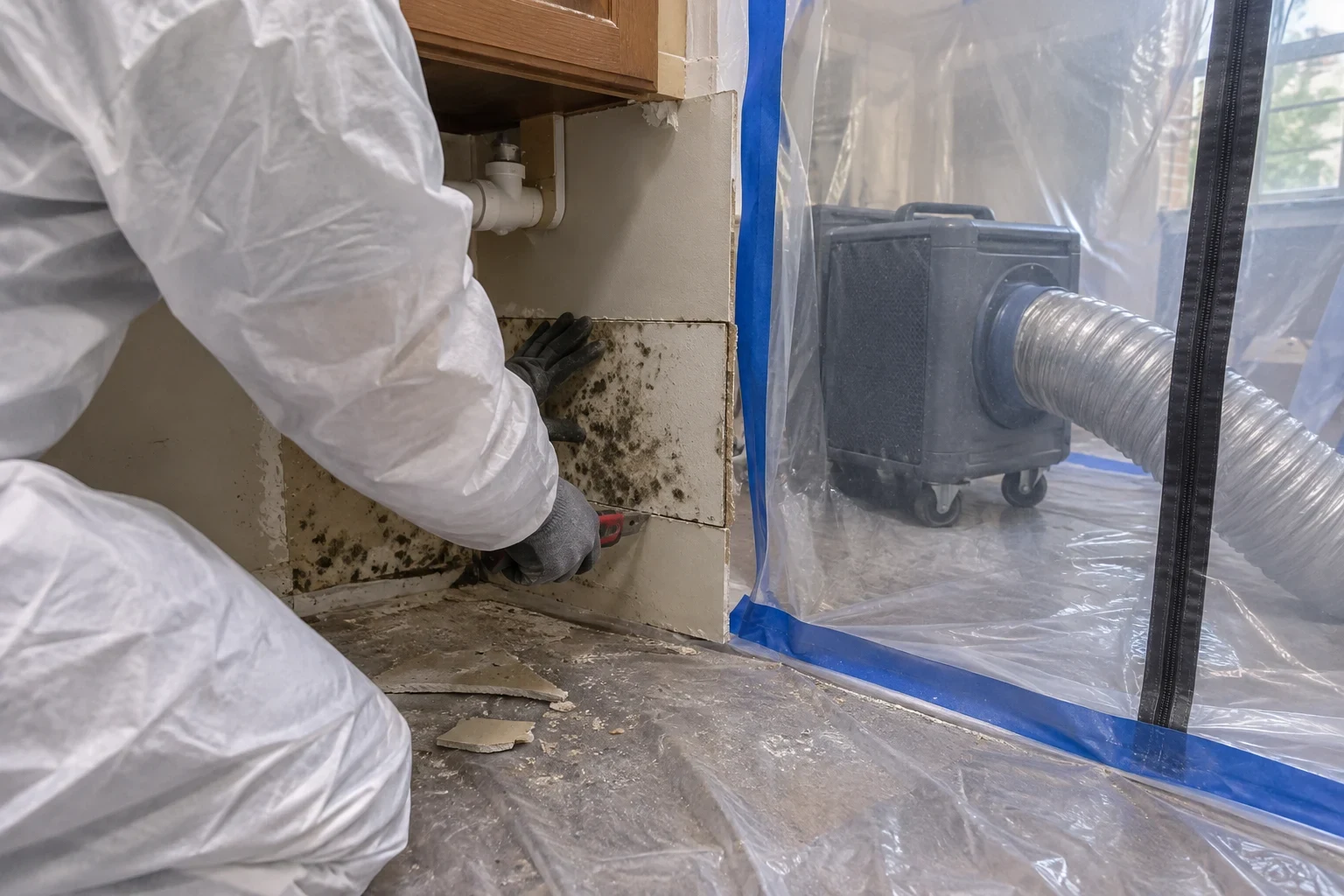
Mold Remediation
We contain mold, fix the moisture behind it, remove only the materials that can't be cleaned and save sound framing and subfloor wherever we can.
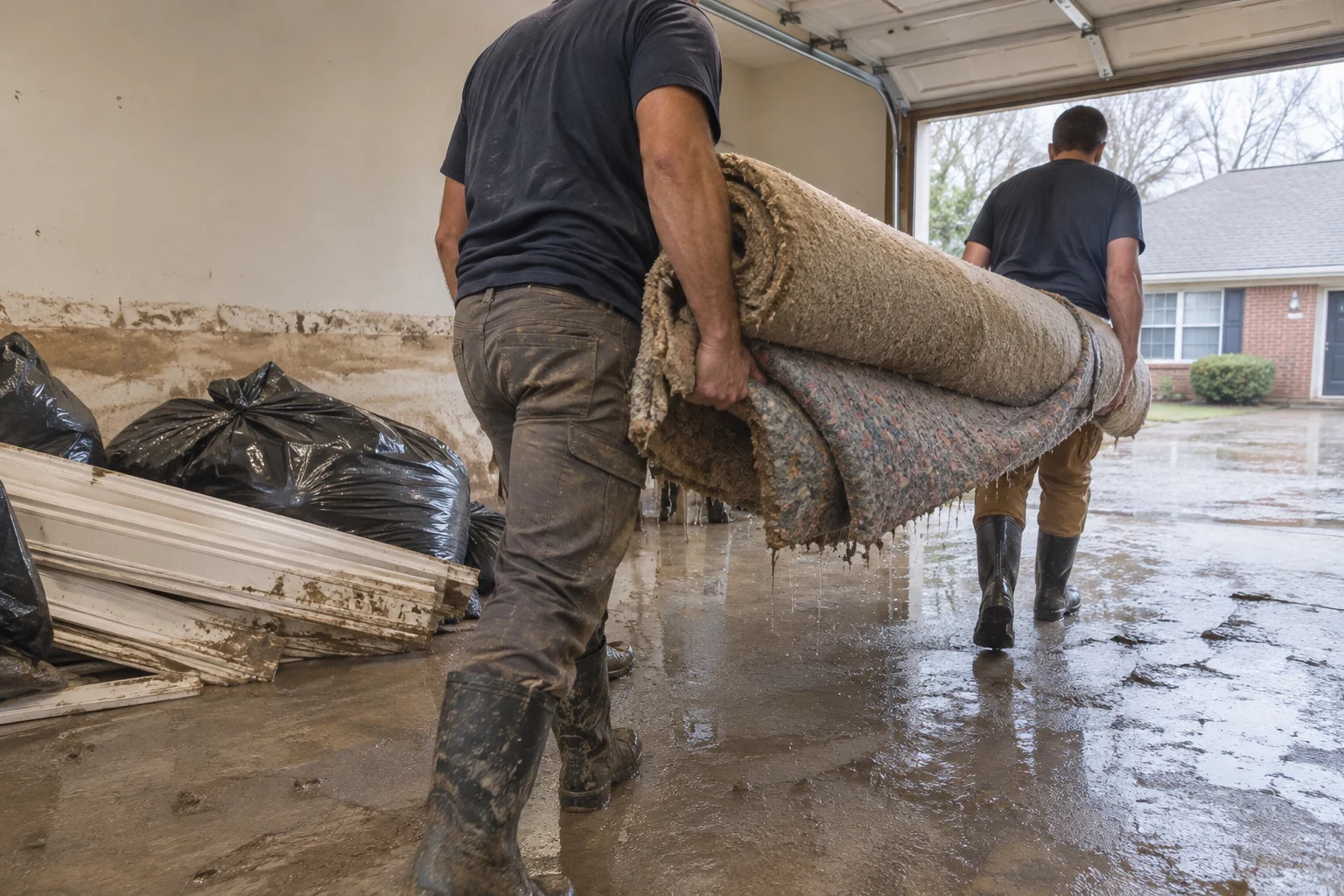
Flood Cleanup
Floodwater removal, mud and silt cleanup, flood cuts and sanitizing, with repair recommended wherever your materials can truly be saved.
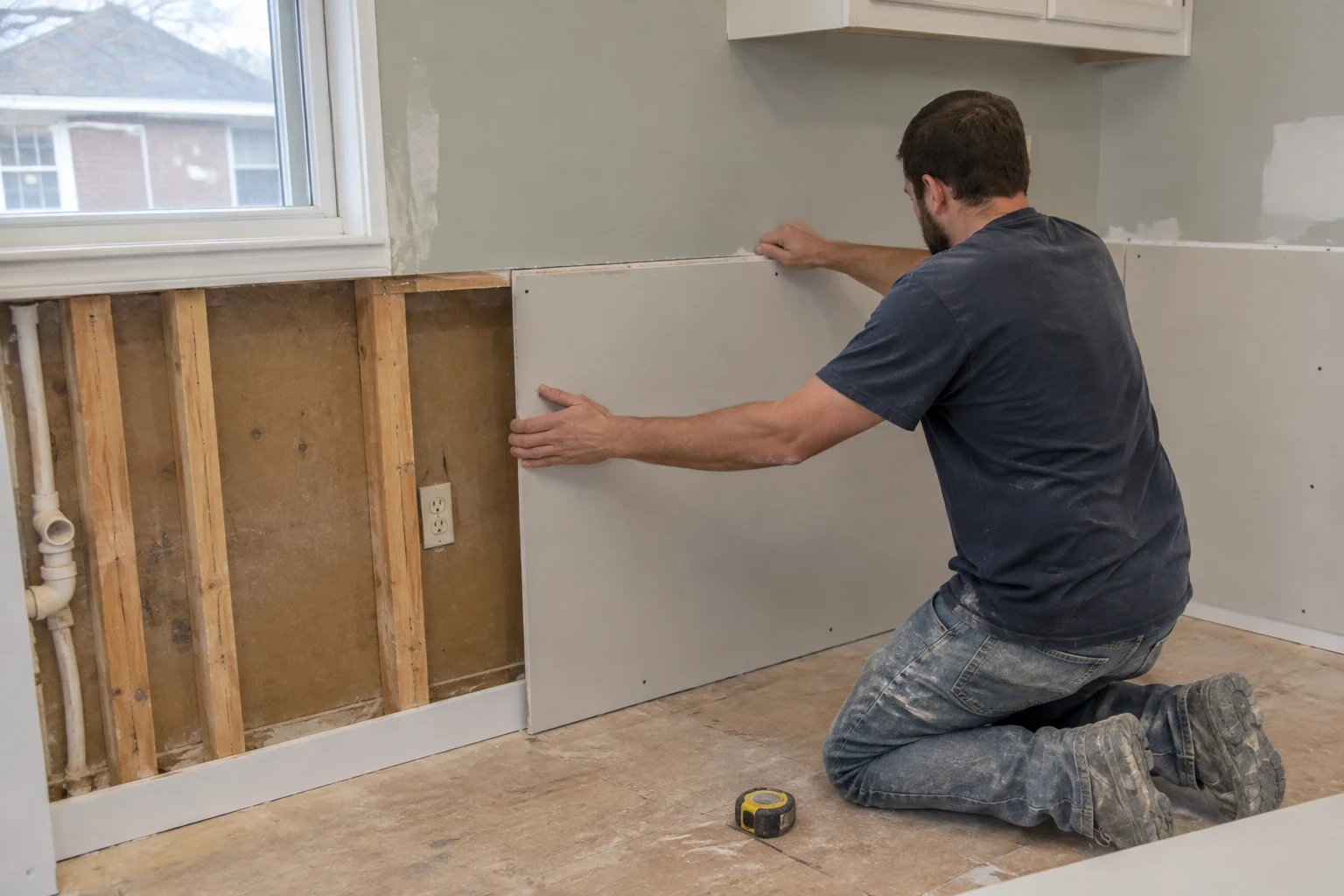
Repairs and Rebuild
Drywall, subfloor, cabinets and trim put back after water damage, with a straight answer on what can be saved and what truly has to go.
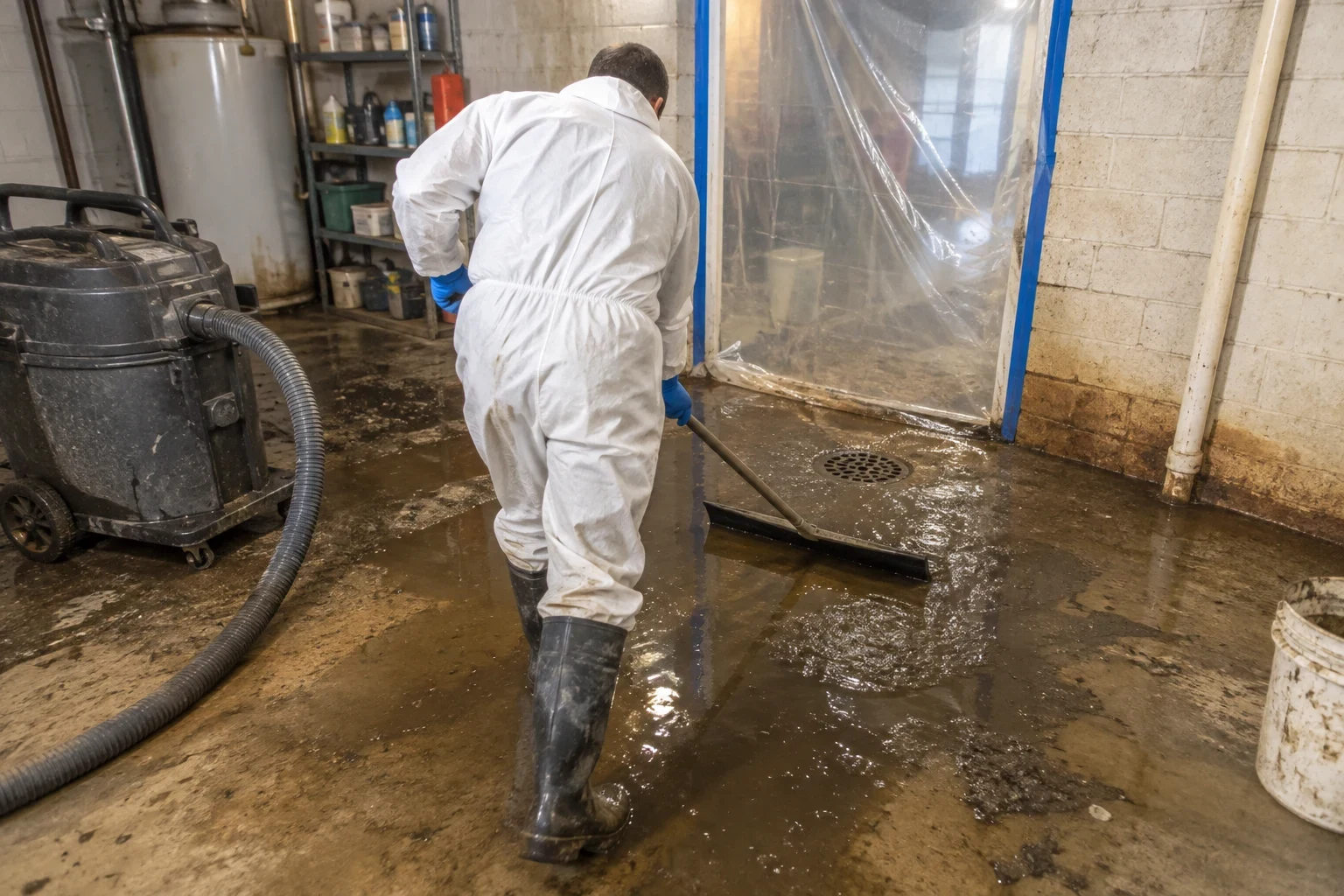
Sewage Cleanup
Removal of sewage-soaked materials, disinfection of hard surfaces and full drying, with a clear answer on what can be cleaned and what has to go.
How a Water Damage Job Runs
Here is what happens from your first phone call to the last piece of trim.
- 1
Call and inspection
You call, we ask where the water came from and whether it has stopped, and we come out. On site we find the source, take moisture readings and photograph the affected areas.
- 2
Stop and extract
If the source is still running, we help you shut it off. Then we pull standing water with truck-mounted or portable extraction units, since removing water as liquid is far faster than drying it out of the air.
- 3
Dry and monitor
We set air movers and dehumidifiers based on the room size and materials, then check readings on return visits. Equipment comes out when the materials reach a dry standard, not on a fixed day count.
- 4
Rebuild what was removed
Once everything is dry, we hang new drywall, lay flooring and install trim wherever material could not be saved, then match the finish to the rest of the room.
What Moves the Cost of Water Damage Restoration
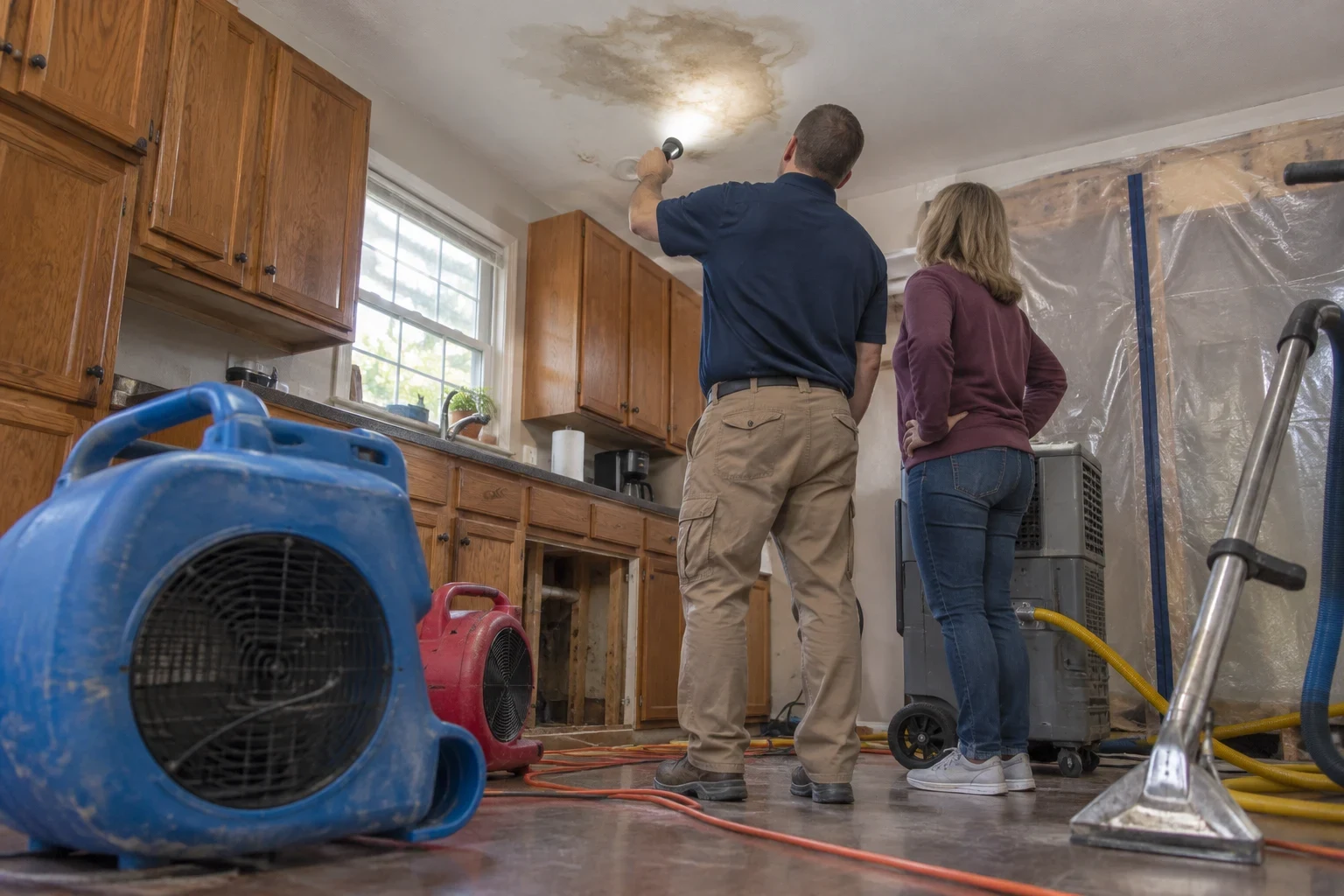
No two water losses cost the same, because the bill follows the water. A dishwasher leak caught in an hour and a slow pipe drip found weeks later can look similar from the kitchen and be very different jobs. These are the factors we look at during the inspection.
Your estimate is written after the inspection and moisture readings, with each line item listed. If the scope changes once a wall is open, we show you why and you approve it first.
- Category of water
- Clean water from a supply line is handled differently from gray water out of a washing machine or black water from a sewer backup. Contaminated water means more removal, antimicrobial treatment and protective gear.
- How long it sat
- Time matters more than volume. After a day or two, drywall and pad that could have been dried in place may need to come out, and mold becomes a real risk in warm, humid months.
- Materials that got wet
- Tile over concrete dries quickly. Hardwood, laminate over foam underlayment and plaster walls in older homes take longer and need closer monitoring.
- Square footage and spread
- The number of rooms and floors affected sets how many air movers and dehumidifiers we run and how many days they stay.
- Access and hidden cavities
- Water under a cabinet run, inside a wall cavity or down into a crawl space takes more work to reach and dry than water on an open floor.
- Rebuild afterward
- If material comes out, the rebuild adds drywall, paint, trim or flooring. Saving more during drying keeps this line shorter.
How We Work Inside Your Home
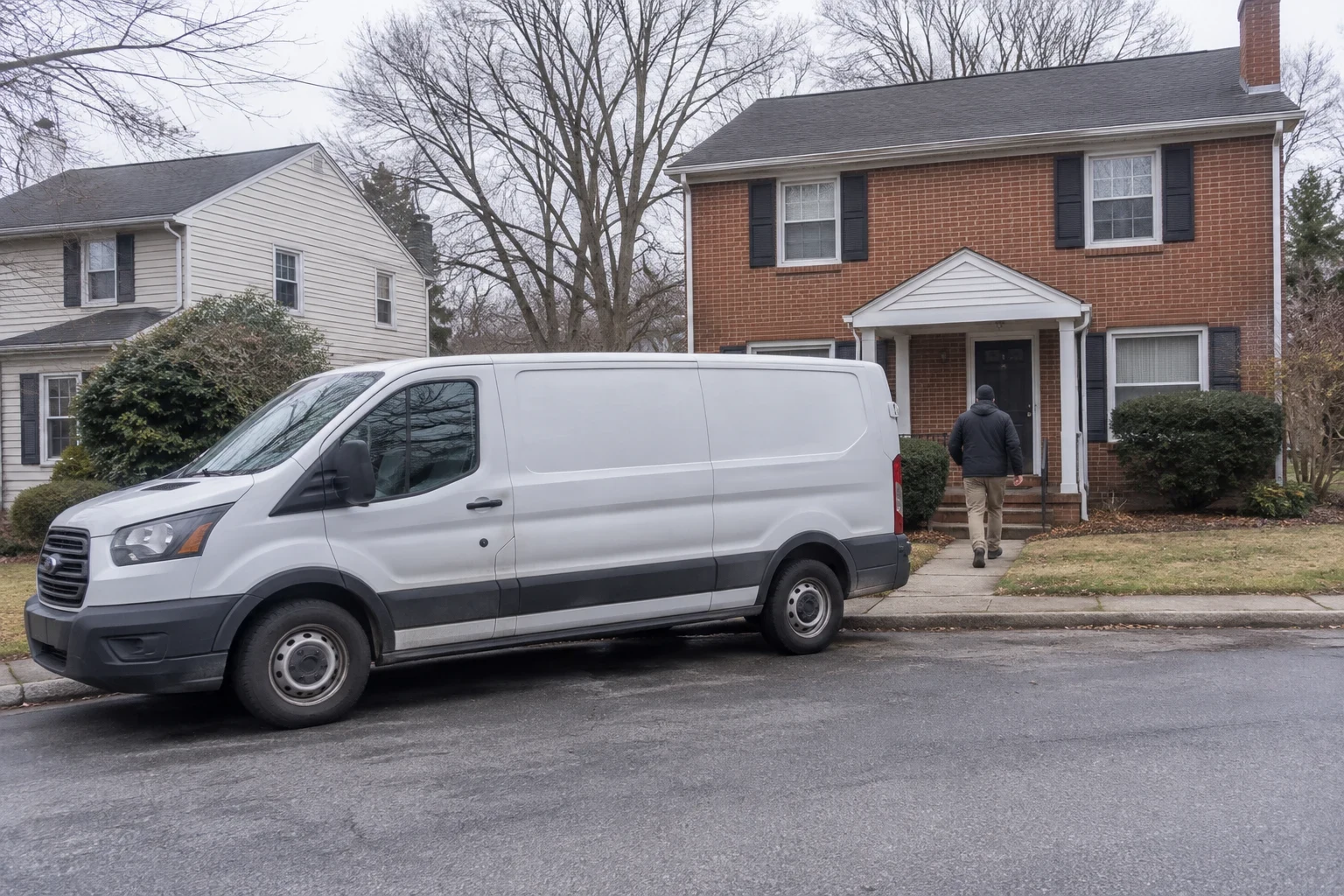
Tearing out drywall and flooring is the easy part of this trade. The harder and cheaper path for you is drying materials that can be dried, and we take that path whenever the readings support it.
- We measure before we cut
- We use pin and pinless moisture meters and a thermal camera to map where water traveled behind baseboards and under flooring. Water wicks up drywall and runs along subfloor seams, so the wet area is usually larger than the stain. The map decides what stays and what goes.
- Repair when it makes sense
- Drywall that took on clean water and is dried within a day or two can often stay. Solid hardwood that has cupped may flatten as the subfloor dries. We say so plainly, and we also say when replacement is the better call.
- When material has to go
- Swollen particleboard cabinet bases, carpet pad soaked by a toilet overflow and anything touched by sewage do not come back. We explain why, show you the reading or the damage, and remove only that.
- Photos and a written scope
- We photograph what we find and write down each item: what was removed, what was dried and which equipment ran for how many days. That record is what your adjuster asks for.
- Your home stays protected
- We lay floor protection on the path to the work area and set up plastic containment when we cut out wet material. Equipment cords are routed out of walkways, and we clean up at the end of each visit.
Water Damage Questions We Hear Most
Something not covered here? (804) 455-7956
How fast can you get to my home?
On site in 60 mins or less. Getting there quickly matters because water keeps wicking into drywall and subfloor for hours after a leak starts. While you wait, shut off the water at the main valve if you can do so safely, and turn off power to any wet area.
Do you work with my insurance company?
We work with most major insurance companies. We document the loss with photos, moisture readings and a written scope, which is what adjusters review. Your insurer decides what the policy covers, but we can explain how the process usually runs and what paperwork to expect.
Does wet drywall always have to be replaced?
No. Drywall that got wet from clean water and is dried promptly can often stay in place, sometimes with a small vent hole at the base to dry the cavity. It has to come out if it has swollen, crumbled, grown mold or been touched by sewage or floodwater. We decide from the readings, not by habit.
How long does drying take?
Most homes dry in about three to five days, but dense materials like hardwood or plaster can take longer. We check moisture levels on each visit and remove equipment once materials reach a dry standard. Pulling equipment early is how hidden mold starts.
Will I get mold after a leak?
Mold can begin growing within a couple of days on wet drywall paper, wood and carpet pad, especially in warm, humid weather. Fast extraction and proper drying are the best prevention. If mold is already there, our mold remediation work contains the area, removes affected material and treats what remains.
Can I stay in my home during the work?
For most clean water jobs, yes. The air movers are loud and the rooms will be warm, but the rest of the house stays usable. After a sewage backup, we may advise keeping people and pets out of the affected area until cleanup is done.
How much will it cost?
We cannot price a job before seeing it, because the category of water, the materials involved and how long it sat change the scope. The on-site inspection is free, and you get a written, line-item estimate ahead of any work.
Where We Work
We are based in Manchester and serve homes across the surrounding area, including Richmond, Midlothian, Bon Air, Meadowbrook and Brandermill. We also cover Rockwood, Tuckahoe, Lakeside, Montrose and Bellwood.
- Manchester
- Richmond
- Meadowbrook
- Midlothian
- Bon Air
- Rockwood
- Tuckahoe
- Brandermill
- Lakeside
- Montrose
- Bellwood
If your town is not listed, call and ask. The Service Areas page has more detail.
Find Out What Can Be Saved
A leak, an overflow or a backed-up drain gets more expensive by the hour. We will come out, measure the damage and tell you what can dry in place.