ServicesDrying and Dehumidifying
Drying and Dehumidifying in Manchester, VA
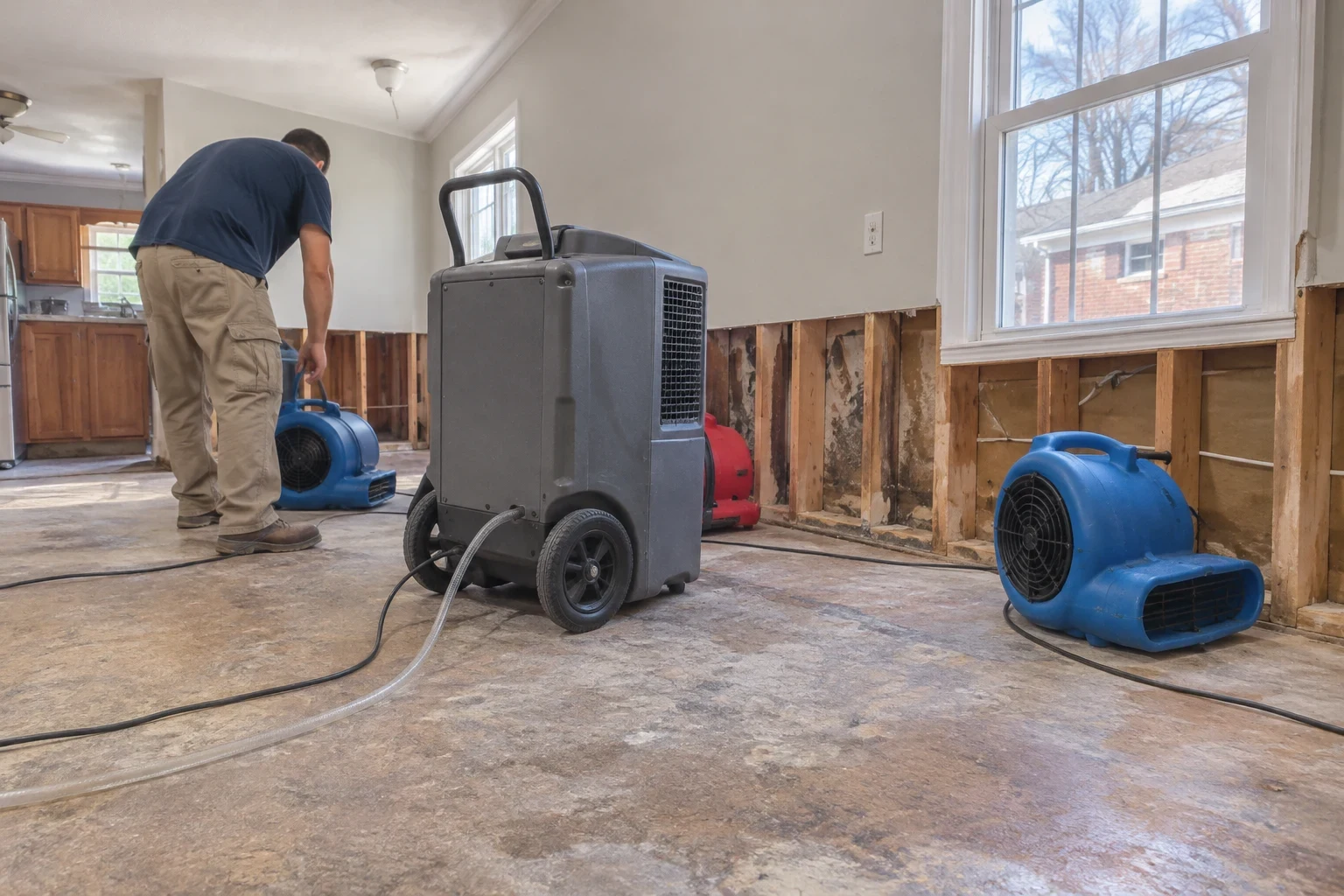
Once the standing water is gone, the damage that remains sits inside drywall, subfloor and framing. We set air movers and dehumidifiers, measure moisture every day, and dry materials in place whenever the readings show they can be saved.
What structural drying does and when you need it
Extraction removes the water you can see. Drying removes the water you can't: moisture soaked into gypsum board, wood studs, hardwood flooring, the plywood or OSB subfloor, and the air in the room. Left in place, that moisture keeps drywall soft, cups hardwood boards and gives mold the damp conditions it needs, often within 48 to 72 hours.
We repair before we replace. Drywall that wicked water a few inches and still holds its shape can usually be dried where it hangs. Hardwood with mild cupping often flattens again as its moisture content drops. When a material has delaminated, swollen past recovery or absorbed contaminated water, we say so plainly and explain why replacing it is the better call.
Drying normally follows our water extraction work and comes before any repairs and rebuild. During a humid Virginia summer, opening windows pulls moist air in rather than out, so we keep the drying area closed and let the dehumidifiers do the work.
What our drying service includes
- Moisture mapping
- We trace how far water traveled with pin and pinless moisture meters and a thermal imaging camera. Readings go on a drying log so you can see where the water is and how it changes day to day.
- Air movers placed for evaporation
- High-velocity air movers are angled along walls and across floors to sweep away the thin layer of saturated air that sits on wet surfaces. Placement matters more than the number of units.
- Refrigerant and desiccant dehumidifiers
- Low-grain refrigerant dehumidifiers pull water vapor out of warm living spaces. Desiccant units work better in cool basements and crawl spaces, where refrigerant coils lose efficiency.
- Small, controlled openings
- Instead of cutting out whole walls, we pull baseboards and drill small holes low in the drywall, then push dry air into the cavity. Toe-kick panels under cabinets come off so the space beneath can dry. These openings are simple to patch.
- Hardwood and subfloor drying
- Drying mats sealed over wood floors draw moisture up through the boards and out of the subfloor below. This is often what saves a cupped floor from being torn out.
Signs your home still needs drying
Drywall soft at the bottom
Press the wall near the baseboard. If it gives, or the paint has bubbled or the tape seams have lifted, the gypsum core is still holding water.
Cupped or peaked flooring
Hardwood boards with raised edges, or laminate seams that have started to peak, are absorbing moisture from below. The subfloor is usually wetter than the boards.
A musty smell after cleanup
If the room smelled fine the first day and musty by the third, moisture is trapped somewhere and microbial growth may be starting.
Carpet dry on top, damp underneath
Carpet fibers dry fast while the pad and the subfloor beneath stay wet. Lift a corner and feel the pad.
A slow leak behind a wall or cabinet
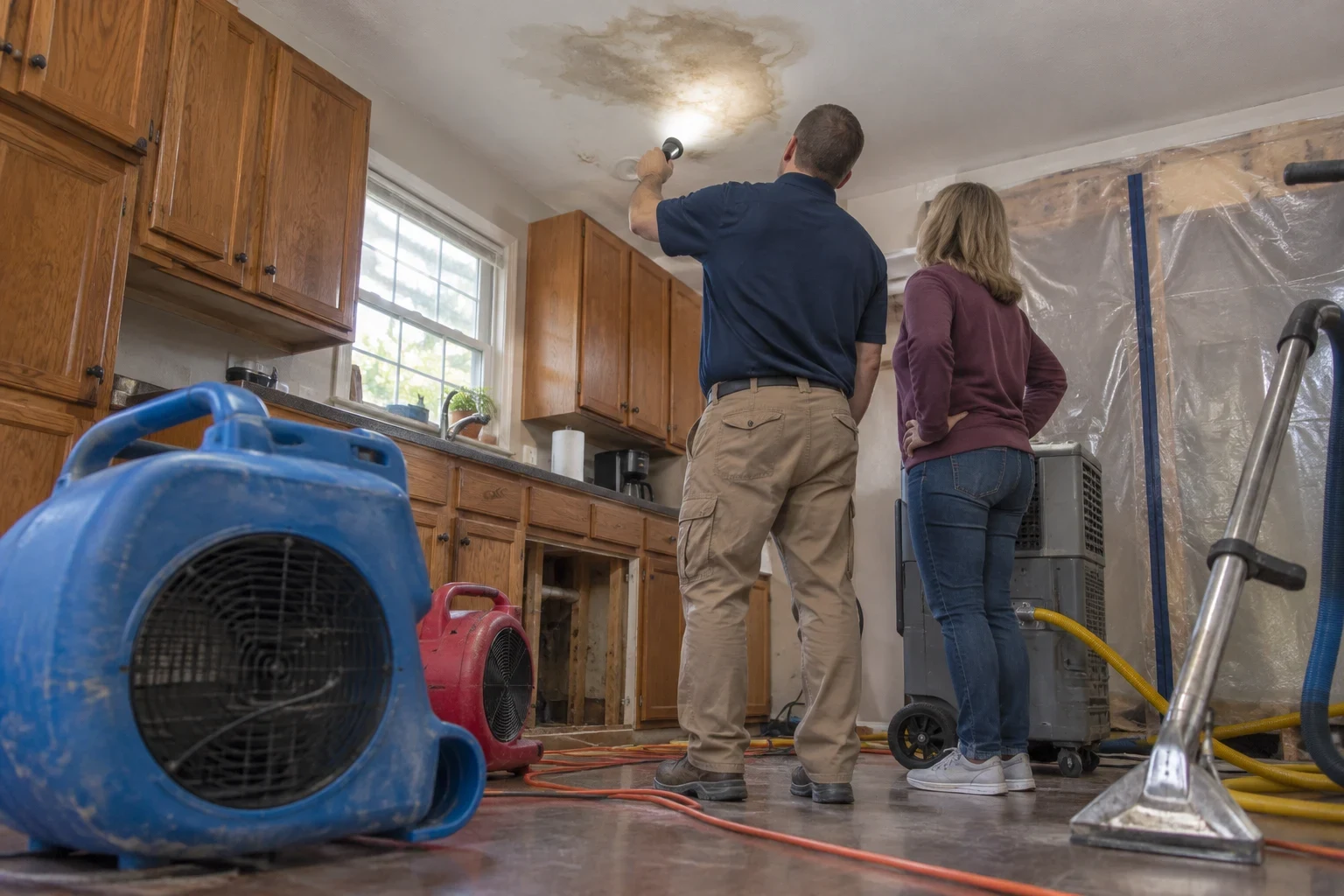
Failed dishwasher lines, sink supply lines and water heaters leak into spaces you cannot see. By the time a stain shows, the cavity has been wet for a while.
How a drying job runs
- 1
Free inspection and moisture map
We walk the affected rooms, take readings and mark the wet boundary on walls and floors. You get a clear answer on what can be dried in place and what, if anything, cannot.
- 2
Setup and containment
We close off the drying area, set air movers and dehumidifiers, and make any small wall or cabinet openings needed. Furniture is moved or raised on blocks so legs do not stain wet carpet.
- 3
Daily monitoring
Each day we record temperature, relative humidity and grains of moisture per pound of air, plus readings in the materials themselves. Equipment gets moved or swapped as wet areas shrink.
- 4
Confirm dry and hand off
Materials are dry when they match readings from unaffected areas of your home, not when they feel dry. We remove the equipment and explain what dried successfully and what needs repairs and rebuild.
What affects the cost of drying
Drying is priced on the equipment needed and the days it runs, so anything that adds wet material or slows evaporation moves the total. We explain each line before setup and update you as readings come down. We work with most major insurance companies and can walk you through what your adjuster will want to see in the drying log.
- Size of the wet area
- More square footage and more rooms mean more air movers and dehumidifiers, and usually more days of monitoring.
- Materials involved
- Hardwood, plaster and layered flooring hold water longer than drywall or vinyl. Dense materials need specialty equipment like floor mats.
- Type of water
- Clean water from a supply line can often be dried in place. Gray water or anything from a sewer backup changes the job and may call for our sewage cleanup service first.
- Time before drying starts
- Water that sat for days has wicked higher and soaked deeper. Starting early keeps both the drying time and the list of replaced materials shorter.
Drying and dehumidifying questions
Something not covered here? (804) 455-7956
How long does it take to dry out my home?
Many clean-water losses dry in three to five days. Hardwood, plaster and crawl spaces can take longer. We track readings daily, so you will know where things stand instead of guessing.
Can I just use box fans and a store-bought dehumidifier?
Household units move a fraction of the air and pull far less water than professional equipment. Surfaces may feel dry while wall cavities and subfloor stay wet, which is where mold starts. Without meters, there is no way to confirm the materials are actually dry.
Will you have to tear out my drywall?
Often not. If the drywall is clean-water wet and still firm, we dry it in place through small holes behind the baseboard. We recommend removal only when the board has crumbled, the water was contaminated or mold has already started.
Can we stay home while the equipment runs?
Most families do. The equipment is loud, the drying area runs warm, and the units draw steady power, so we plan placement around bedrooms and circuits with you.
How quickly can you get here?
We offer emergency water damage response, and our standard is on site in 60 mins or less. The sooner drying starts, the more of your walls and floors can be saved.
Find out what can be dried and saved
We will measure the moisture, show you the readings and give you an honest answer on drying versus replacing. Help is available day or night when water is still spreading.