ServicesFlood Cleanup
Flood Cleanup in Manchester, VA
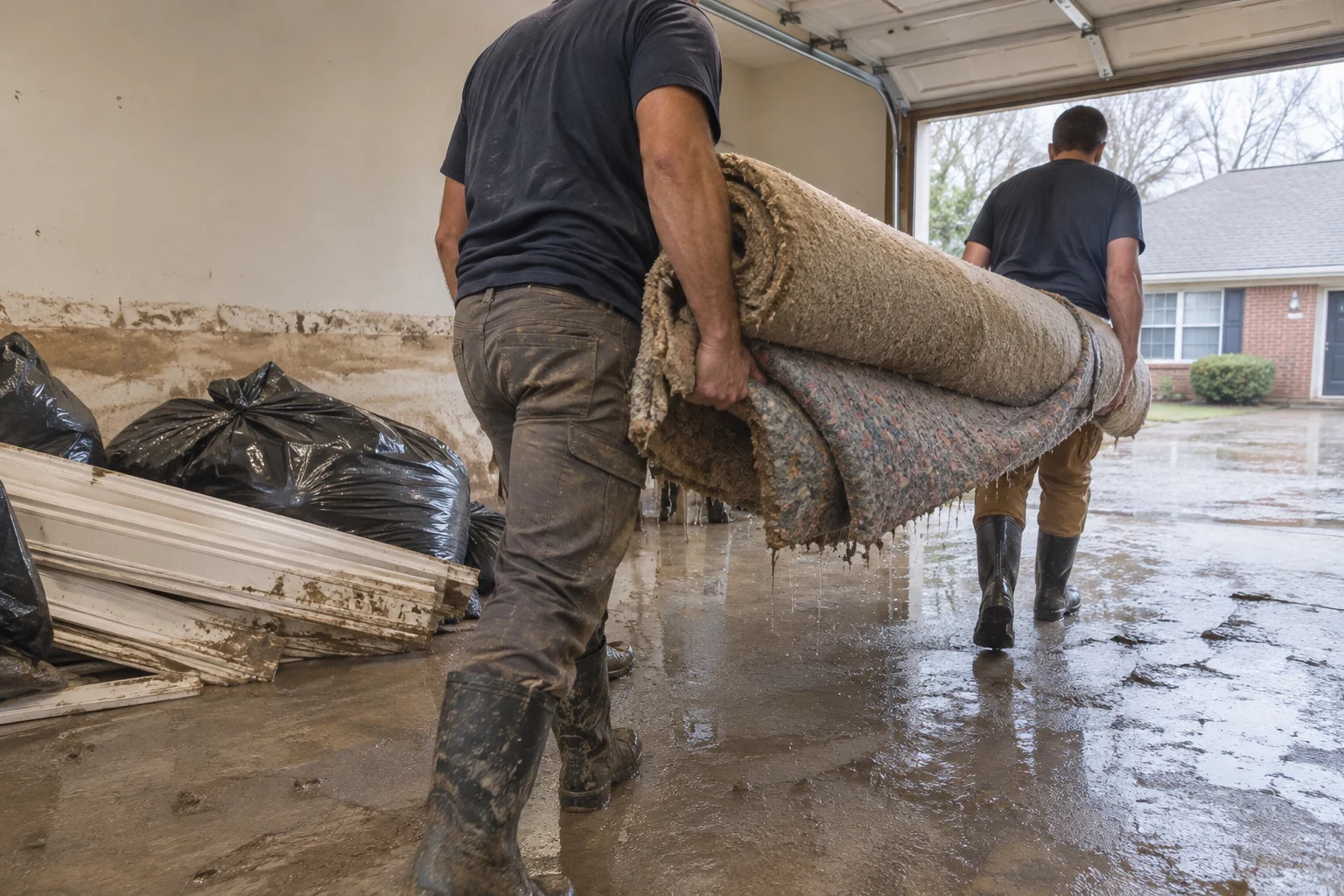
When storm water or rising groundwater gets into your home, we pump it out, clear the silt, sanitize what it touched and dry the structure. We save framing, plaster and hardwood when testing says they can recover, and explain plainly when something has to go.
What Flood Cleanup Covers and When You Need It
Flood cleanup is for water that came in from outside: groundwater seeping through a block foundation, storm runoff pushing under a door sill, or a creek over its banks. Around Richmond that usually follows a heavy summer storm or the remnants of a tropical system. This water carries soil, lawn chemicals and often sewage from overloaded lines, so the restoration industry classes it as Category 3, the most contaminated type. Drying it is not enough. It has to be removed, and the surfaces it touched have to be cleaned and treated.
We start from repair. Solid framing lumber, plaster, concrete and solid hardwood usually come back after cleaning and controlled drying. Carpet pad, fiberglass batts, particleboard cabinet bases and drywall that sat in floodwater usually do not, because they wick contaminated water deep into material that cannot be sanitized. We show you the moisture readings and tell you which is which before anything is torn out.
If the water came from a burst supply line, our Water Extraction and Drying and Dehumidifying pages fit your situation better. If it backed up through a floor drain or toilet, see Sewage Cleanup.
What the Work Includes
Pumping and silt removal
Submersible pumps handle deep standing water and truck-mounted extraction pulls water from carpet and subfloor. We shovel and squeegee out mud while it is still wet, because dried silt sets hard on slabs and in wall cavities.
Flood cuts at a measured height
We cut drywall a set distance above the highest wet reading, not by guesswork. That opens the cavity for drying and removes the wicked material while keeping as much sound wall as possible.
Sorting what stays
Plaster walls, solid wood trim, doors and hardwood flooring get tested and judged one by one. Anything that has to be discarded is photographed and listed first so your claim has a record.
Cleaning and antimicrobial treatment
Studs, sill plates, subfloor and slab are scrubbed with detergent, rinsed and then treated with an EPA-registered antimicrobial. This step is what makes the remaining structure safe to close back up.
Crawl space and ductwork
We pull soaked insulation and torn vapor barrier from the crawl space and check any ductwork running there for water inside the runs.
Drying and daily monitoring
Air movers and dehumidifiers run until framing and subfloor reach a dry standard, confirmed with meter readings logged each visit.
Signs Your Home Needs Flood Cleanup
A water line on walls or furniture
A stain or tide mark tells you how high the water reached. Drywall wicks well above that line, so the wet area is larger than it looks.
Mud at doorways or floor drains
Silt left behind means the water came from outside and carried soil and bacteria with it.
Wet carpet along exterior walls after rain
Water entering at the sill plate or foundation often shows up first at the perimeter of a room.
Cupped or buckling hardwood
Boards that rise at the edges have absorbed water from below. Caught early, solid hardwood can often be dried flat.
A musty crawl space after a storm
That smell usually means wet insulation or standing water under your home, where mold can start within a day or two.
How a Flood Cleanup Job Runs
- 1
Your call and our arrival
Tell us where the water is and how deep. We are on site in 60 mins or less, and the first thing we do is check that power to flooded circuits is off and that there is no gas odor.
- 2
Inspection and moisture mapping
The on-site inspection is free. We use pin and pinless meters and a thermal camera to map how far water traveled, take photos, and walk you through what we recommend repairing and what needs replacing.
- 3
Extraction and tear-out
We remove water and silt, make flood cuts, and pull pad, insulation and anything else that cannot be cleaned. Floors and furniture outside the work area are covered.
- 4
Clean, treat and dry
Exposed surfaces are scrubbed and treated, then drying equipment is set and checked daily until readings confirm the structure is dry.
- 5
Final readings and next steps
You get the final moisture log. If walls, floors or cabinets need to be put back, our Repairs and Rebuild crew picks up from there.
What Moves the Cost of Flood Cleanup
We give you a written, line-item scope after the inspection, so you see what each part of the job is for. The price comes down to how much material the water reached and how much of it can be saved. Repairing instead of replacing usually lowers the total.
- Depth and spread of the water
- An inch across one room is a different job from a foot through a finished basement. Square footage and wicking height set how much tear-out is needed.
- How long it sat
- Water left for several days soaks deeper into framing and subfloor, which means more drying time and a greater chance materials cannot be saved.
- What your home is built from
- Plaster, solid hardwood and plywood cabinet boxes often recover. Drywall, laminate and particleboard usually have to be replaced.
- Access and contents
- Tight crawl spaces and rooms full of belongings take longer to work in, and contents may need to be moved, cleaned or documented.
Flood Cleanup Questions
Something not covered here? (804) 455-7956
Does homeowners insurance cover flood cleanup?
Standard homeowners policies generally exclude water that rises from outside, and that damage is usually covered by a separate flood policy. A burst pipe is often treated differently. We work with most major insurance companies and supply photos, moisture logs and a line-item scope, but your adjuster makes the coverage decision.
Can my hardwood floors be saved?
Often, yes, if they are solid hardwood and drying starts quickly. We use specialized drying setups to pull moisture up through the boards and track readings until they settle. Engineered flooring with a fiberboard core usually delaminates and has to be replaced.
Do you have to remove all the drywall?
No. We cut only above the highest wet reading, which is commonly a couple of feet up the wall. The upper wall stays in place, which keeps the rebuild smaller.
How long does the drying take?
Most flooded rooms need several days of equipment time once tear-out and cleaning are done. Crawl spaces, concrete slabs and dense hardwood can take longer. We decide when to stop based on readings, not the calendar.
Will mold grow after a flood?
It can start within 24 to 48 hours on wet organic material, which is why we move quickly and apply antimicrobial before drying. If we find existing growth, we handle it under our Mold Remediation service.
Can we stay in the house during cleanup?
Many families can, as long as power to the flooded area is off and the work zone is closed off. With heavily contaminated water, we recommend keeping children and pets away from the affected rooms until cleaning is complete.
Floodwater in Your Home? Let's Look at It Together
We will check how far the water went, show you what can be repaired and get the cleanup started. The inspection costs you nothing.