ServicesRepairs and Rebuild
Repairs and Rebuild in Manchester
Once the water is out and the structure is dry, we put your home back together. We restore the drywall, flooring, cabinets and trim that can be saved, swap out only what can't, and show you the moisture readings and photos behind every call.
Putting the house back, one material at a time
Water does different things to different materials. Gypsum drywall wicks water upward and loses strength. Particleboard and MDF swell and never shrink back. Solid hardwood, plywood and framing lumber often recover fully once dried to normal moisture content. A good rebuild starts by sorting the damage that way, not by gutting everything below the waterline.
We recommend repair when the material can return to sound condition, and we explain plainly when replacement makes more sense. A cupped oak floor that dries flat can be sanded and refinished. Laminate with swollen core edges cannot. You get the reason for each decision, not just a list of tear-outs.
Rebuilding starts only after drying is confirmed. If your home still needs water extraction or drying and dehumidifying, we handle those first so nothing gets closed up wet.
What our rebuild work covers
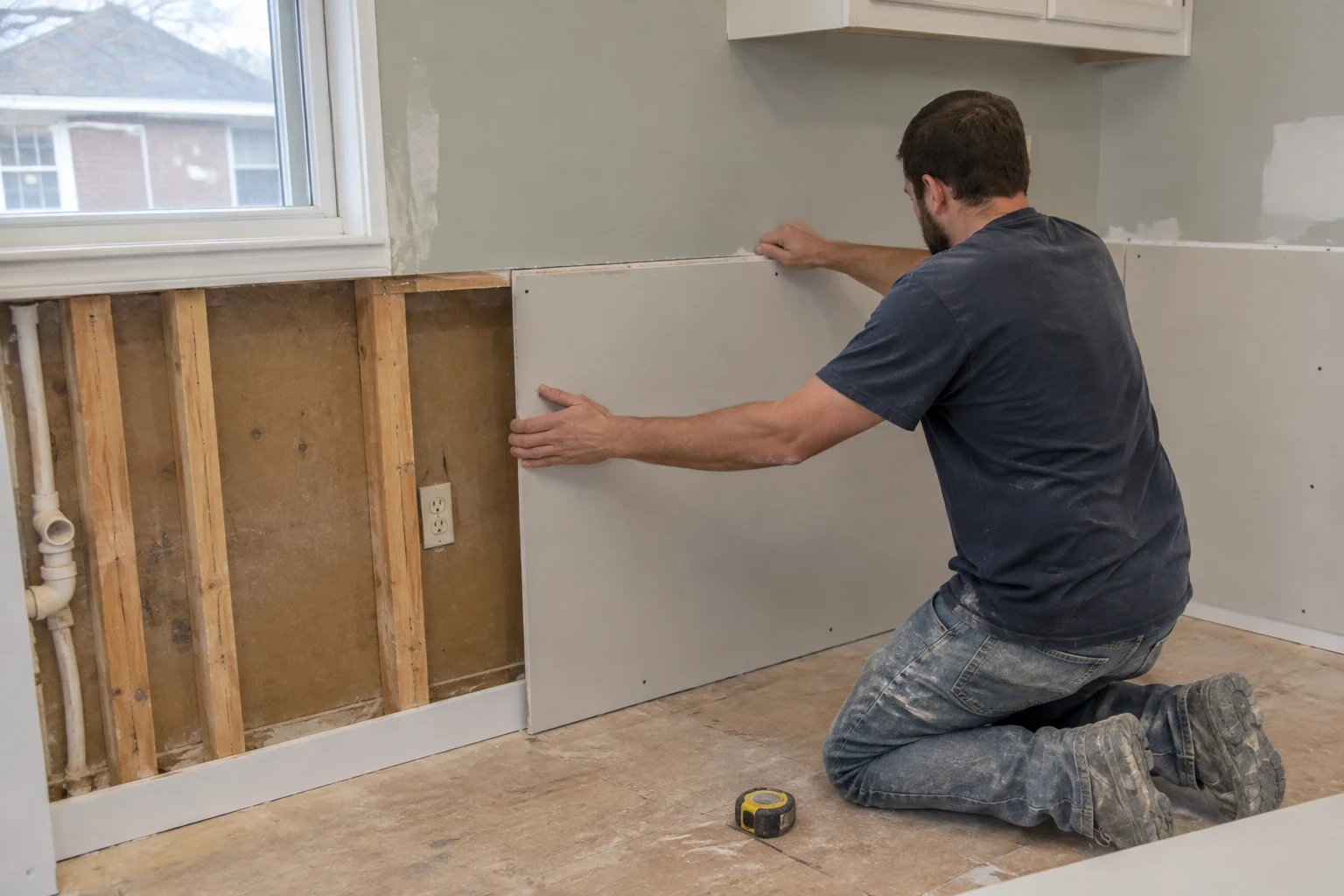
Drywall cut-back and patching
We make a straight flood cut a few inches above the highest wet reading, usually at 2 or 4 feet so a standard sheet fits cleanly. New board is taped, mudded and textured to match the wall around it.
Subfloor and flooring
We test the subfloor first. Plywood that has dried flat usually stays. OSB with swollen edges gets cut out and new panels go down. Finished flooring is assessed by type, since hardwood, tile, vinyl plank and carpet each fail differently.
Cabinets, trim and doors
Solid wood face frames and doors often clean up and stay. Swollen particleboard cabinet boxes and MDF baseboard come out, because the bond between fibers is broken and paint will not hide it.
Insulation and wall cavities
Wet fiberglass batts compress and lose their R-value, so we pull them and install new. We check the bottom plate and studs for soft spots while the cavity is open.
Primer, paint and finish
Water lines and tannin stains bleed through regular paint. We seal them with a stain-blocking primer under the finish coats so the stain does not come back a month later.
Permits when the work calls for one
Structural fixes, electrical work and some plumbing changes need a permit. When yours does, we pull it and schedule the inspection.
Signs your home needs rebuilding, not just drying
- Soft or crumbling drywall at the base
- If the bottom of the wall gives under your thumb or the paper face peels away, the gypsum core has broken down and that section has to be cut out.
- Baseboards pulling away from the wall
- MDF trim swells at the bottom edge and pushes off the wall. It rarely flattens again after drying.
- Floors cupping, crowning or buckling
- Hardwood boards that rise at the edges took on moisture from below. Some will settle as they dry, which is why we measure first rather than writing up new flooring.
- Swollen cabinet bottoms or toe kicks
- Sink base cabinets take the worst of a supply line leak. A bubbled or flaking cabinet floor means the particleboard is done.
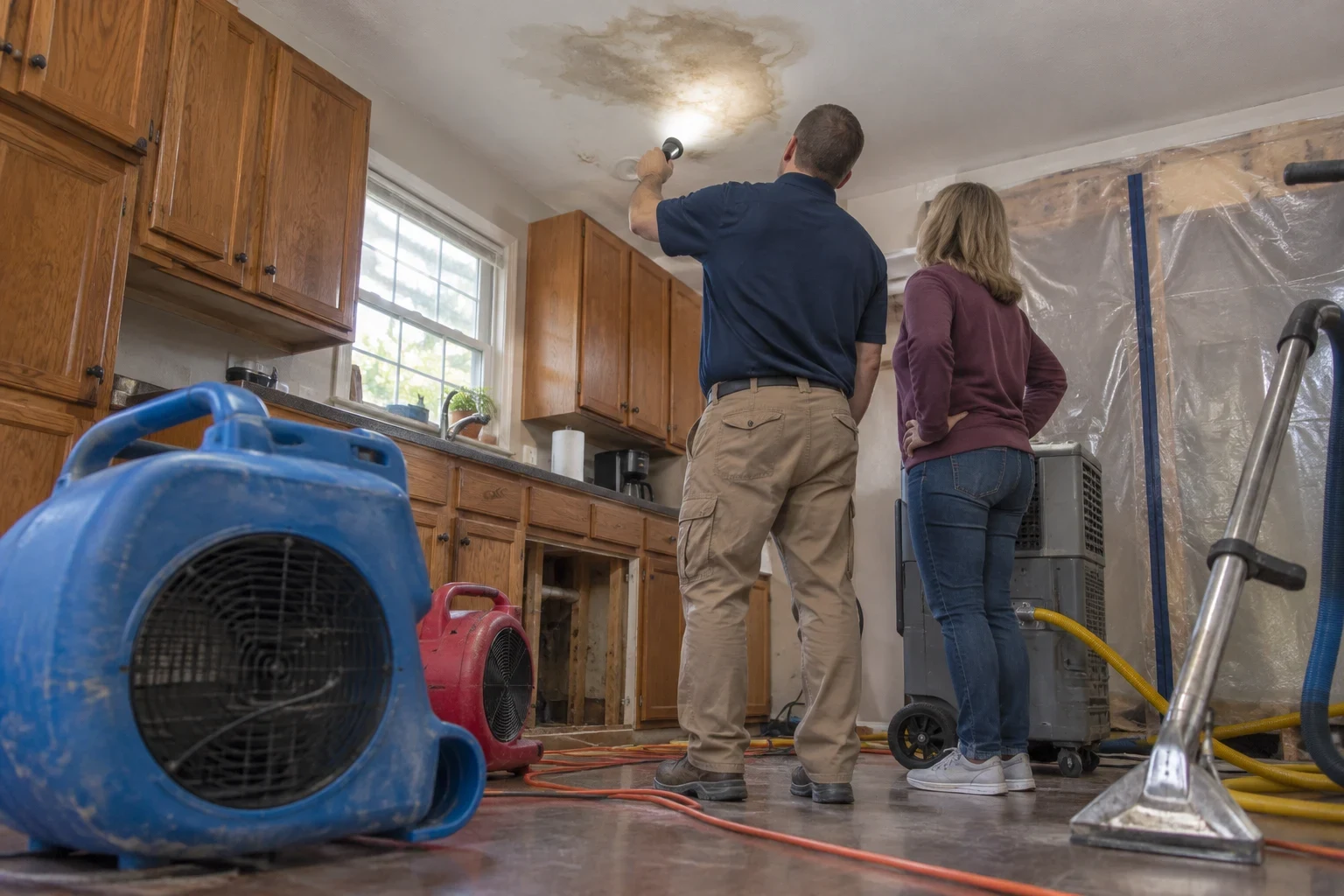
- Sagging or stained ceilings
- A ceiling below a bathroom or attic leak can hold water above the drywall. Sagging board should come down on purpose, not on its own.
- A musty smell that stays
- Odor after drying can point to growth inside a wall cavity. We check for it and bring in mold remediation ahead of any rebuild.
How a rebuild job runs
- 1
Confirm the structure is dry
We take moisture meter readings on framing, subfloor and remaining drywall and compare them to dry areas of the same home. Rebuilding over wet wood traps moisture and invites mold.
- 2
Walk through and write the scope
You get a written, line-item scope with photos of what we found. Each item is marked repair or replace, with the reason for it.
- 3
Protect your home and prepare the area
We lay floor protection on the path in and out, cover nearby furniture, and set up dust control around cutting and sanding.
- 4
Rebuild in order
Framing and subfloor fixes come first, then insulation, drywall, trim, flooring and cabinets. Inspections happen at the stage the permit requires.
- 5
Finish, clean up and walk it with you
After paint and final trim, we clean the work area and walk through it with you so you can check every item on the scope.
What moves the cost of a rebuild
The price depends on how much material is past saving and what turns up once walls and floors are open. That is why we give a line-item scope after a free on-site inspection rather than a guess over the phone. Saving a hardwood floor or a set of solid cabinet doors often removes a large line item.
- How much can be saved
- Refinishing dried hardwood costs far less than new boards. The more material that recovers, the smaller the rebuild.
- Matching existing finishes
- Discontinued flooring, custom trim profiles and older wall textures can take extra work to match. Sometimes a whole room of flooring is redone so it reads as one surface.
- Hidden damage
- A rotted sill plate, a corroded subfloor around a toilet flange, or wet framing behind a shower only shows up once the area is opened. We photograph it and talk with you first, then add it to the scope.
- Permits and inspections
- Structural, electrical or plumbing work adds permit fees and inspection scheduling to the job.
Rebuild questions
- Can you just paint over the water stain on my ceiling?
- Only if the drywall is dry and still firm. Plain latex paint lets the stain bleed back through, so we use a stain-blocking primer first. If the board sags or crumbles, it has to be cut out and new board hung, and we will show you why.
- Do I have to replace the whole floor?
- Not always. Solid hardwood often dries flat enough to sand and refinish, and tile set on a sound subfloor usually stays. Laminate and some vinyl plank with swollen edges cannot be saved, and matching a partial section is sometimes harder than it looks.
- Will my insurance pay for the rebuild?
- That depends on your policy and the cause of the water. We work with most major insurance companies and can explain how the claim process usually works and share our photos and scope with your adjuster. Coverage decisions are made by your insurer, not by us.
- How long does the rebuild take?
- It depends on the size of the area, material lead times and any inspections the permit requires. A patched wall and new baseboard is a short job. Kitchens with new cabinets take longer because of ordering. We give you a realistic schedule with the written scope.
- Do you pull the permits?
- Yes, when the work requires one. Cosmetic work like drywall patching and paint usually does not. Structural, electrical and plumbing changes usually do, and we handle the application and inspections.
- Can you match my existing wall texture and trim?
- In most cases, yes. We match knockdown, orange peel and smooth finishes by hand, and we source or mill trim to match existing profiles. If an exact match is not possible, we tell you ahead of time and suggest options.
Find out what can be saved
We check the damage, take readings and give you an honest repair-or-replace answer up front, with no work started until you agree. If water is still coming in, we also provide emergency water damage response.