ServicesWater Extraction
Water Extraction in Manchester, VA
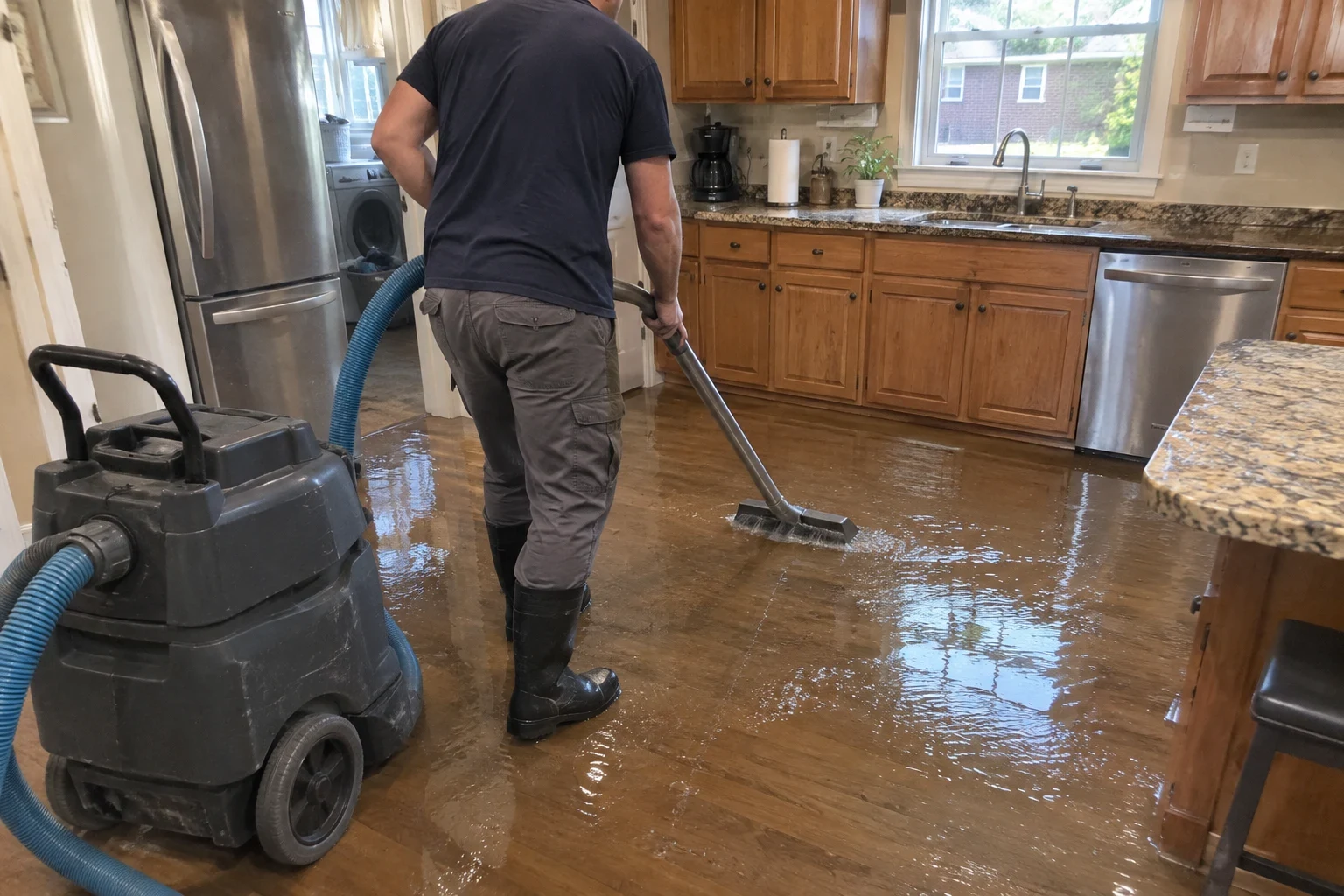
Standing water does its worst damage in the first day. We remove it with truck-mounted and portable extractors, measure how far it has wicked into floors and walls, and tell you plainly which materials can be dried and kept and which have to go.
Getting the Water Out Before It Gets Into Everything Else
Water extraction is the first physical step after a leak or flood. It means removing liquid water from carpet, pad, hard floors, subfloor surfaces and crawlspaces before it soaks deeper. Dehumidifiers and air movers cannot do this job well on their own. A single gallon left in a carpet pad can take days to evaporate, and the longer it sits, the more drywall, baseboard and subfloor it pulls into the problem.
We extract first because it decides how much of your home can be repaired instead of replaced. Carpet that is extracted quickly after a clean-water leak, like a burst supply line or a failed water heater, can often be dried in place and reinstalled. The same carpet left wet for several days usually starts to delaminate, and the backing separates from the face fibers. We show you the readings, explain which side of that line each material falls on, and only recommend tear-out when drying will not bring it back.
We are on site in 60 mins or less, and we work with most major insurance companies, so the documentation starts the moment we arrive.
What Our Extraction Work Covers
Truck-mounted and portable extraction
Truck-mounted units give us the strongest suction for large areas. Portable extractors reach upper floors, tight rooms and spots where hoses cannot run from the driveway.
Weighted extraction for carpet and pad
A weighted extraction tool compresses the carpet and pad while it pulls water through them. This removes far more water than surface wands and is often what makes saving the carpet possible.
Moisture mapping
We use pin and pinless moisture meters and a thermal camera to trace how far water has traveled under flooring and up drywall. The map tells us where to extract, where to open up and where drying alone will work.
Crawlspace and basement pumping
Submersible pumps handle standing water in basements and crawlspaces, followed by wet vacuums on the remaining puddles. We check vapor barriers and insulation while we are down there.
Water category assessment
Clean supply-line water, gray water from a washer or dishwasher and contaminated floodwater are handled differently. We identify the category first because it decides what can safely be kept. Contaminated water moves the job to our sewage cleanup or flood cleanup process.
Photo and reading records
We photograph the affected areas and log moisture readings before and after extraction. You get a clear record for your insurance claim, though the adjuster still makes the coverage decisions.
Signs You Need Water Extraction
Carpet that squishes underfoot
If pressing on the carpet pushes water up around your foot, the pad is saturated. Towels and shop vacs will not reach it.
Standing water anywhere
Any visible water on a floor, in a basement or in a crawlspace should come out the same day. Every hour it sits, more of it wicks into drywall and wood.
Hardwood starting to cup
When the edges of floorboards rise above the centers, moisture is coming from below. Fast extraction and drying can often flatten them again before the boards are permanently deformed.
Laminate swelling at the seams
Laminate with a fiberboard core swells at the joints when water gets in. Early extraction can limit the damage to a smaller section.
Water after a storm or appliance failure
Heavy summer thunderstorms, a failed sump pump or a burst washing machine hose can all leave water hiding under cabinets and behind baseboards even when the floor looks dry.
How an Extraction Visit Runs
- 1
Stop the source and check safety
We confirm the water supply is shut off or the leak is stopped. If water has reached outlets or the panel area, we cut power to those circuits before anyone walks through.
- 2
Inspect and measure
We identify the water category, take moisture readings and use thermal imaging to find the edges of the wet area. You get an honest read on what looks salvageable before work starts.
- 3
Extract
We remove standing water with pumps and extractors, then make repeated weighted passes over carpet and pad. We move furniture, set it on blocks and protect anything that has not gotten wet.
- 4
Set up drying and explain next steps
Once the liquid water is out, we set air movers and dehumidifiers as part of our drying and dehumidifying service. We walk you through what we kept, what we removed and why, and what monitoring visits come next.
What Affects the Cost of Water Extraction
Extraction is priced on the conditions in your home, not a flat rate. We explain the cost drivers during the free on-site inspection so nothing on the final bill surprises you. Your insurance policy may cover part or all of the work, depending on the cause.
- Square footage and depth
- A wet hallway takes far less time and equipment than a soaked basement with several inches of standing water.
- Water category
- Clean water from a supply line can be extracted and dried. Gray or contaminated water requires protective gear, antimicrobial treatment and usually removal of porous materials.
- Flooring and materials
- Carpet and pad, hardwood, laminate and tile over a wood subfloor each need different tools and time. Whether the pad can be saved changes the scope a good deal.
- Access
- Tight crawlspaces, upper floors far from the truck and rooms full of furniture all add labor.
Water Extraction Questions
Something not covered here? (804) 455-7956
Can I just use a shop vac and fans?
For a small spill on tile, yes. Once water has reached carpet pad, subfloor or the bottom of drywall, a shop vac only removes the surface. The water left underneath is what leads to warped floors and mold, which is why weighted extraction and moisture readings matter.
Will my carpet have to be thrown out?
Not always. Carpet soaked by clean water and extracted quickly can often be dried in place. The pad is usually replaced because it holds water like a sponge and is inexpensive. Carpet exposed to sewage or floodwater is removed for health reasons.
How soon can you get here?
We are on site in 60 mins or less. Getting there quickly is the main reason extraction saves materials that would otherwise be replaced.
Will insurance pay for water extraction?
Many homeowner policies cover sudden water damage like a burst pipe, while gradual leaks and outside flooding are often treated differently. We work with most major insurance companies and provide photos and moisture readings for your claim. Your adjuster makes the coverage decision.
What happens after the water is out?
Extraction removes liquid water, but materials still hold moisture. We set up drying equipment and check readings until floors and walls reach normal levels. If anything cannot be dried, our repairs and rebuild work restores it.
Water on the Floor Right Now
The sooner the water is extracted, the more of your floors and walls we can dry and keep. We serve Manchester, Richmond, Midlothian and nearby towns.