ServicesMold Remediation
Mold Remediation in Manchester, VA
Mold is a moisture problem first. We find the leak or damp spot feeding it, seal off the area, and remove only the materials that truly can't be cleaned. Sound studs, joists and subfloor get cleaned and kept, and we show you why.
What mold remediation actually fixes
Mold needs three things: moisture, a food source and time. In your home the food is usually the paper face of drywall, the wood in framing and OSB sheathing, or the backing on carpet and pad. Give those materials 24 to 48 hours of dampness and growth can start. Killing the visible spots with bleach does little, because the root structures sit inside porous material and the moisture that fed them is still there.
Real remediation means stopping the water, keeping spores from spreading to clean rooms, physically removing the growth, and drying the structure so it doesn't come back. Our approach is repair before replace. Mold on the surface of solid lumber can usually be sanded, wire-brushed and HEPA-vacuumed off, so the framing stays. Moldy drywall, insulation and carpet pad hold spores in their fibers and get cut out. When a joist or subfloor panel has gone soft from long-term rot, we tell you plainly that it needs replacing and show you the probe readings and photos.
What the work includes
Moisture source tracing
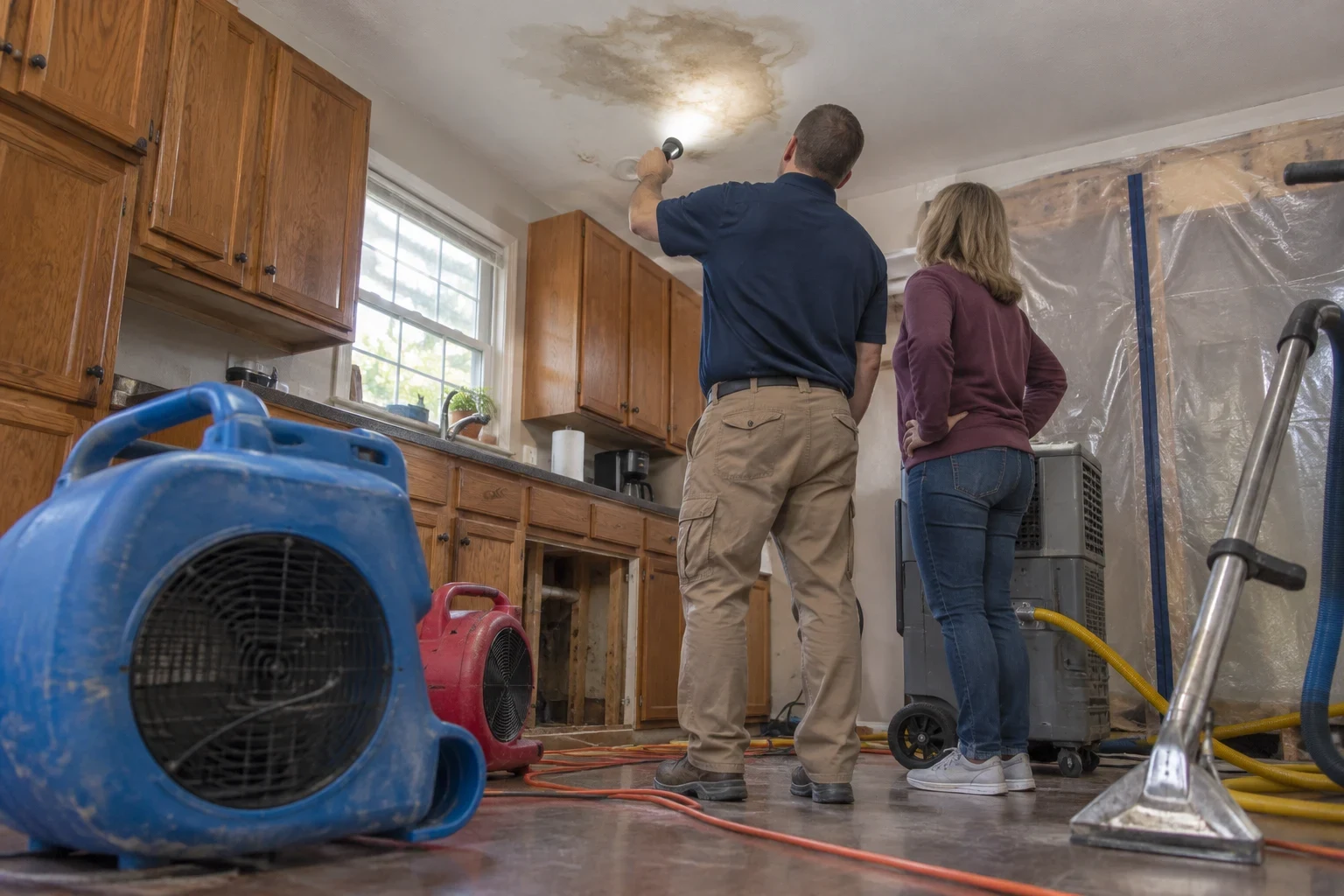
We use moisture meters and a thermal camera to follow the dampness back to its cause: a weeping supply line, a failed wax ring, condensation on ductwork, or a wet crawl space. If the source isn't fixed, the mold returns.
Containment and negative air
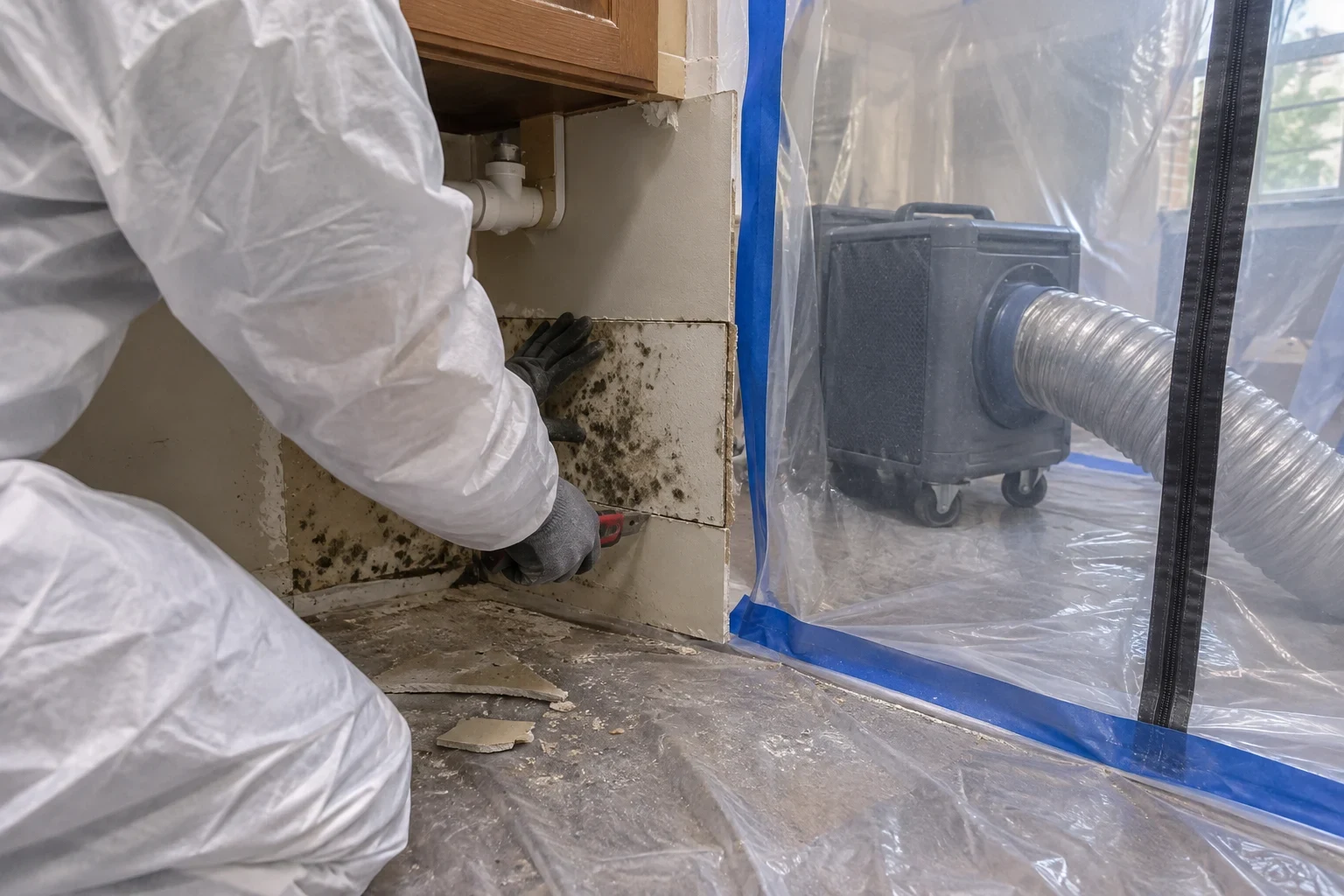
We wall off the work area with polyethylene sheeting and zip doors, then run a HEPA air scrubber exhausted outside. That keeps the work zone under slight negative pressure so disturbed spores don't drift into bedrooms or the HVAC return.
Selective removal
Drywall is cut out to a clean margin beyond the visible growth, and wet insulation and carpet pad are bagged inside the containment. We cut conservatively, removing what is contaminated and leaving what isn't.
Cleaning salvageable wood
Studs, joists, sill plates and subfloor with surface growth are HEPA-vacuumed, scrubbed or sanded, then treated with an antimicrobial. Staining that remains after cleaning is cosmetic and can be sealed with a mold-resistant primer.
Drying and verification
Before anything is closed up, the framing has to read dry on the meter. Our drying and dehumidifying work handles that step, and we record final readings for your file.
Signs you need mold remediation
- A musty smell that won't clear
- That earthy odor comes from gases mold releases as it grows. If it's strongest in one closet, bathroom or near a basement wall, there is usually hidden growth behind a surface.
- Spotting on drywall or ceilings
- Gray, green or black speckles, often near the floor or around a window, mean the paper face has been wet long enough to feed growth.
- Peeling paint or bubbling wallpaper
- Moisture trapped behind a finish pushes it off the wall. The drywall underneath is often damp and starting to grow mold.
- Damp crawl space or sweating ducts
- Central Virginia's humid summers put a lot of moisture under houses. Wet insulation hanging from joists or condensation on duct runs feeds mold on the floor framing above.
- An old leak that was never dried
- If a pipe burst or a toilet overflowed and the area was only wiped up, the wall cavity or pad underneath may still be wet. That is a common starting point for mold.
How a mold job runs
- 1
Free on-site inspection
We look at the affected area, take moisture readings, and photograph what we find. You get a clear answer on what can be cleaned and what has to go.
- 2
Fix the water first
We identify the source and either stop it ourselves or tell you exactly which repair, such as a plumber or a gutter fix, is needed before work proceeds.
- 3
Contain, remove, clean
We set up sheeting and negative air, remove contaminated porous materials, and clean the framing that stays. Debris is bagged inside the containment and carried out sealed.
- 4
Dry, check and close up
Dehumidifiers and air movers bring the wood down to normal moisture content. After a final visual check and meter readings, our repairs and rebuild crew can hang new drywall and finish the space.
What affects the cost of mold remediation
Price follows the square footage of growth and how much material has to come out versus be cleaned in place. Because we save sound framing whenever we can, many jobs cost less than a full tear-out. You get a written, line-item estimate after the inspection.
- Size and spread
- A patch behind a vanity is a small containment. Growth across a whole crawl space or finished basement means more sheeting, more air scrubbers and more labor.
- What the mold is growing on
- Surface growth on lumber is cleaned. Drywall, insulation and carpet pad are removed and later replaced, which adds material and rebuild cost.
- Access
- Tight crawl spaces, attics with low clearance, and growth behind cabinets or tubs take more time to reach and contain.
- Condition of the structure
- If probing shows a joist or subfloor panel is soft from rot, replacing it adds carpentry. Solid wood with surface staining doesn't.
Mold remediation questions
- Can I just spray bleach on it?
- On a hard, nonporous surface like tile, cleaning can work. On drywall or wood, bleach mostly lightens the color while the water in it soaks deeper and the growth inside stays. It also does nothing about the moisture that started the problem.
- Will you have to tear out all my drywall?
- No. We remove drywall where growth is present plus a margin around it, and we check the surrounding wall with a meter. If the rest is dry and clean, it stays.
- Does homeowners insurance cover mold?
- Many policies cover mold only when it results from a sudden, covered water event like a burst pipe, and they often cap the amount. Mold from long-term leaks or humidity is frequently excluded. We work with most major insurance companies, and we'll give you photos and moisture readings for your claim, but your adjuster decides coverage.
- Can we stay in the house during the work?
- In most cases, yes. Containment and negative air keep the work zone sealed from the rest of your home. For large jobs or anyone with respiratory concerns, we'll talk through whether a few days away makes sense.
- How quickly can you get here?
- Mold that comes with an active leak or fresh flooding is urgent, and we respond around the clock. We're on site in 60 mins or less, and we cover Manchester plus nearby areas like Midlothian, Bon Air and Richmond.
Find out what can be saved
We'll trace the moisture, show you where the mold is, and explain which materials can be cleaned and which need replacing. If water is still coming in, tell us and we'll treat it as an emergency.